![OmniByte - PNG Black Logo Oct 2021 (1).png]](https://help.omnibyte.com/hs-fs/hubfs/OmniByte%20-%20PNG%20Black%20Logo%20Oct%202021%20(1).png?height=50&name=OmniByte%20-%20PNG%20Black%20Logo%20Oct%202021%20(1).png)
A sub-table is a dynamic table that is within a dynamic table. Sub-tables have a field type of a dynamic table, which is opened from a row or column. A sub-table can contain a sub-table and there is no limit, other than what is usable on the device and report.
- From the Actions/Container menu in the Form Designer, click the Dynamic Table input.
- The Dynamic Table input is added to the form.
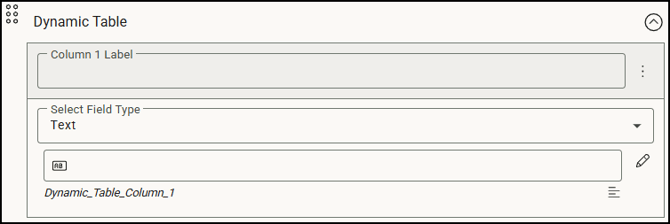
- From the Select Field Type list, select Dynamic Table.
- Click
 (Edit) to view the input slider information.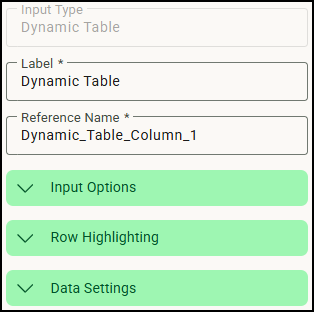
- Enter a label for the sub-table. Although it may seem unnecessary, the table label and column labels are important for retaining the field reference when creating reports.
- Expand Input Options.
-
If you want to display a label next to the + (Add button) in the app, enter that label in Text Next to Add Button field.
- Specify a minimum and maximum table row count in the Minimum Rows and Maximum Rows fields. You must enter a minimum of 1 to get a starting row in a table.
- Toggle Use Summary Row to add a totals row to the bottom of your table. Once you’ve added number field types to your table the options for the Summary row appear. You can choose Average, Min, Max, or Sum to summarize the row numeric information. Toggle Hide Summary Row on Form to hide the resulting summary information from the app user.
- Specify the table layout. Select Horizontal if you want the table headers to be at the top of the table and data to fill the rows. Select Vertical if you want the table headers to be in the first column of the table and data to fill the columns.
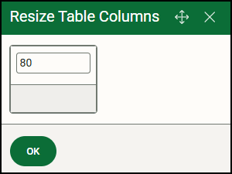
- Under Column Sizing, if you want to automatically size column widths, mark Use auto-sized column widths. If you want to adjust the column widths manually, mark Manually adjust column widths. Then, click the Modify Column Sizes button to open the Resize Table Columns window. This window displays a “preview” table where there is a number field at the top of the table header where you can enter a pixel number, or you can drag the column width to the size you want.
- Expand Row Highlighting to select the column heading for which you want to set a row to be highlighted with a background color based on the way a particular column or cell is answered in a table. The highlight color you set up also applies to the report, so you don’t need to set up functions for that purpose.
Note: Any unlabeled columns will not appear in the list to highlight. - Expand Data Settings to use a data set in the sub-table.
- Save your entries.